

Different models, shared mission: meeting the never-ending demand for affordable spay/neuter.
By Debbie Duel
Jeremy Lewis, co-owner of Spay Now in Columbia, Maryland, says confidence and competence are key to running a successful low-cost spay-neuter clinic. His wife, Joy Lewis, D.V.M., has plenty of both. Spay Now logged 5,000 surgeries in 2024.
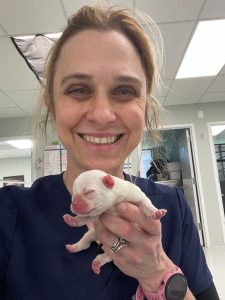 When asked how much prior business experience the Lewises had before purchasing the clinic in 2022, Jeremy, an engineer by training, responded, “essentially none”. That, however, did not deter the couple from purchasing the high-volume Laurel, Maryland, surgery clinic from Kathleen Howard, D.V.M. (Dr. Howard continues to own and operate the low-cost Shore Pet Surgery in Grasonville, MD). Shortly after Spay Now was officially theirs, the Lewises set their sights on relocating the clinic to a larger, more efficient space in Columbia, Maryland. The current facility, opened in 2024, is 20 minutes north of the original site and is easily accessible from three major highways. The suburban location is situated between two major metropolitan cities, 20 miles from Baltimore, MD, and 30 miles from Washington, D.C.
In addition to word of mouth, Spay Now’s referrals come from general veterinary practitioners and animal welfare organizations. Business is booming, and has been for decades.
Less than 30 miles from Spay Now, Dr. Christina Barrett, Director of Veterinary Surgery and Shelter at the Baltimore Humane Society (BHS), performs 12-16 sterilizations a day. BHS, a pioneer in the field, has provided low-cost spaying and neutering since the early 1960s. Two thousand animals from the general public and 550 shelter animals are spayed and neutered at BHS annually.
Newly graduated veterinarians have many options; the majority work in private companion animal practices (AMVA 2018). Dr. Lewis chose a slightly different path. The 2011 Mississippi State University College of Veterinary Medicine grad accepted a position as a shelter veterinarian in a high-volume euthanasia animal shelter, where she was responsible for minimizing the number of future births of surplus puppies and kittens. Shelter medicine as a career option was still relatively new and did not become an AVMA provisionally recognized specialty until 2014. Even so, that experience sealed her fate.
The Lewises relocated to suburban Maryland in 2012. Dr. Lewis was hired at Spay Now, where she perfected her surgical skills, becoming not just a proficient surgeon but a very fast one. The narrow profit margins of a low-cost clinic require a high volume of daily surgeries. Between 30-40 surgeries are performed every day by Dr. Lewis and an associate.
Spay Now is a for-profit clinic, whereas the BHS’s clinic is nonprofit. Both are open to anyone seeking affordable spay and neuter surgeries for their pets. Both clinics draw from several of Maryland’s largest counties and serve urban, suburban, and rural communities. Within an hour or so of each clinic are several more low-cost clinics. And still, Dr. Barrett reports seeing clients from near and far, including cities in Pennsylvania and Washington, DC. The demand is never-ending. Despite Spay Now’s forever-full schedule, there’s always more to be done. Jeremy concedes being shocked at the constant ringing of the phone. The staff responds to 50 or more calls every day, scheduling appointments three months out.

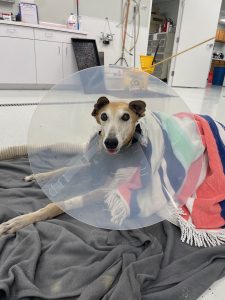 Keeping costs low is a challenge for both clinics. “Wage and supply inflation make it hard to keep prices down,” said Jeremy. Concentrating on high-volume surgery helps Spay Now turn a slight profit. “With a razor focus on surgery, we gain a lot of efficiencies that general practitioners can’t take advantage of. Additionally, we believe that the proficiency of our surgeons compounds, making it easier for them to perform surgeries at much faster speeds. This has many benefits for the animals – they spend less time under anesthesia, and typically have smaller incisions, leading to faster recovery and better overall outcomes,” said Jeremy.
Lower cost does not mean affordable for all. Spay Now partners with local rescues and charities that can, at times, help cover the costs when clients don’t have the means to pay for services. In the past, BHS was awarded a Department of Agriculture grant that allowed income-qualified clients to obtain free spay or neuter surgery. The organization hopes to receive the award again during the next fiscal year, as well as other grants that could subsidize the surgeries, making them more easily accessible to a greater number of pet owners.
During the pandemic, when spay and neuter surgeries came to an abrupt halt, Spay Now began offering emergency surgeries to stay afloat. The clinic continues to provide a variety of surgeries, including affordable dentals and reduced-cost emergency surgeries such as amputations, foreign body removals, and eye enucleations. Spay Now, like BHS, requires that animals be spayed or neutered. If an intact dog requires a leg amputation, spay or neuter surgery is performed, too. Reducing the number of surplus animals is the clinic’s primary goal.
The demands for adopters, fosters, and affordable veterinary care are growing. In addition to providing low-cost spay/neuter surgery, BHS partners with other local animal welfare agencies to operate low-cost vaccine clinics, TNR (funded by a grant covering spay/neuter, ear-tip FVRCP, rabies, and flea prevention), adoption opportunities, and microchip events. As a nonprofit organization, the BHS clinic relies heavily on volunteers and individual donations.
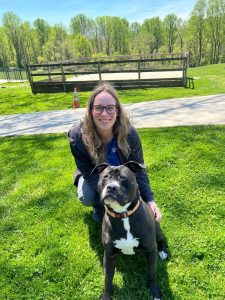 Dr. Barrett worked as a BHS veterinary technician before attending the College of Veterinary Medicine at Western University of Health Sciences in Southern California and completing a shelter internship at the School of Veterinary Medicine at the University of Wisconsin, Madison. “I went to school knowing that shelter medicine was the goal.” She is well aware of the potential for burnout that shelter and clinic staff and volunteers face. “When recruiting, we are honest about the workload up front. We offer working interviews.” A chance to experience the demands of the job and clinic culture before accepting the position may help with burnout and turnover.
Dr. Barrett imposes a rigid structure that helps staff manage a busy, often emotionally-charged workload. She recommends “having routines and sticking to them,” including common-sense protocols, such as charts with drug doses and reversals, practicing regular animal CPR drills, and establishing a system for purchasing and preserving controlled drugs. Probably most importantly, she focuses on the mission and regularly tells staff, “I’m thankful and grateful for the work that they do.” After 5 years at BHS, her life-saving work as a shelter vet is what keeps her going. “I’m helping provide affordable vet care so that animals can stay in their homes rather than needing to be surrendered,” said Dr. Barrett.
Learn more about Spay Now at spaynow.com.
Learn more about Baltimore Humane Society at bmorehumane.org.