
September 6, 2026
By: Brianna Lovell Myers, Executive Director, United Spay Alliance
 Every September 28, the world marks World Rabies Day. It’s a moment to recognize both how far we’ve come in fighting one of humanity’s oldest and deadliest diseases, and how much work remains. This year, United Spay Alliance is using the occasion to spotlight a connection that doesn’t get talked about nearly enough: spay/neuter work is rabies prevention.
A Disease We Nearly Beat, With a Playbook We Can’t Abandon
Rabies is almost always fatal once symptoms appear, but it’s also almost entirely preventable. In the United States, decades of coordinated effort between public health and animal welfare have all but eliminated the canine rabies variant that once killed thousands of Americans a year. Canine rabies transmission was declared eliminated in the U.S. in 2007, a genuine public health success story.

But “eliminated” doesn’t mean “gone.” Rabies still circulates in wildlife populations, and every unvaccinated, free-roaming, or unowned animal is a potential bridge between wildlife rabies and our homes and neighborhoods. That’s where spay/neuter comes in.
Fewer Animals on the Street, Fewer Points of Contact
Vaccination gets most of the credit in the rabies conversation, and it deserves it. But vaccination programs work best when there are fewer animals to reach in the first place.
That’s where spay/neuter delivers.
Community cats and free-roaming dogs are the animals most likely to have contact with rabid wildlife. Every spay or neuter surgery means one less animal reproducing into that vulnerable, hard-to-reach population. Fewer animals means fewer unvaccinated animals, fewer litters born outdoors, and fewer opportunities for rabies to find a way into a community.
Spay/neuter doesn’t replace vaccination. It makes vaccination’s job possible.
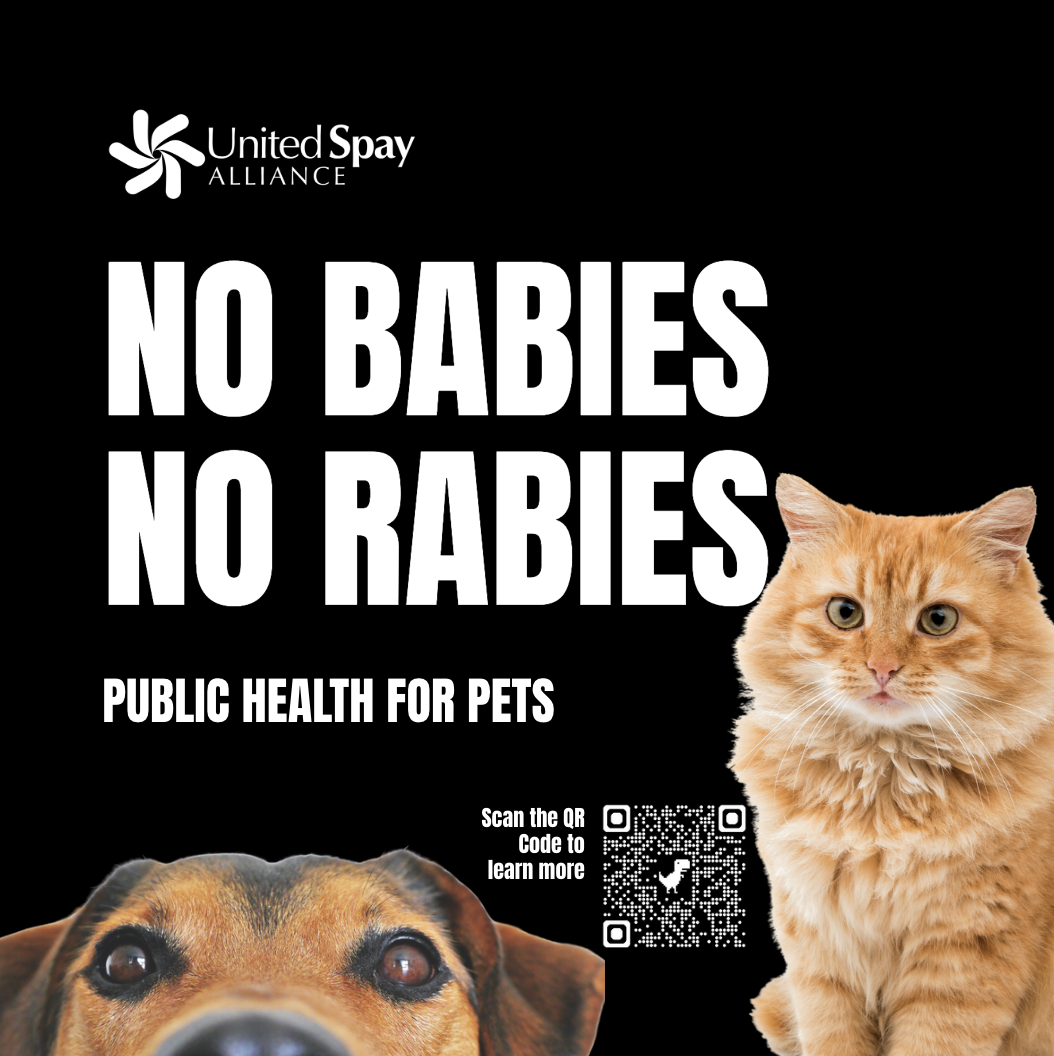
This is the message at the heart of our No Babies. No Rabies. campaign: population management and disease prevention aren’t two separate missions; they’re the same mission, working together.
What We’re Doing This September
To mark World Rabies Day 2026, United Spay Alliance is:
- Sharing a media and outreach toolkit with partner organizations nationwide, so shelters and spay/neuter programs everywhere can tell this story in their own communities — press materials, social graphics, and ready-to-post content are all available now.

- Launching a limited-run “No Babies. No Rabies.” T-shirt, available for the month of September only through Bonfire. Every shirt is a walking reminder of the connection between spay/neuter and rabies prevention, and proceeds go directly toward supporting spay/neuter access.
- Amplifying the history and the stakes, reminding our community that the progress the U.S. has made against rabies didn’t happen by accident, and it doesn’t maintain itself without continued investment in exactly the kind of work we do every day.

How You Can Help
This campaign only works if it spreads beyond us. There are a few easy ways to be part of it:
- Grab a shirt. The No Babies No Rabies tee is available for a limited time only, through the end of September. Shop the Bonfire campaign.
- Support the work. Every spay/neuter surgery is a small act of disease prevention. In 2025, USA-supported programs made more than 8,200 spay/neuter surgeries possible. Consider making a donation to support our work or make a contribution to the spay/neuter organizations and programs working in your community.
- Spread the word. Follow, share, and repost our World Rabies Day content throughout September. Help us put the spay/neuter–rabies connection in front of more people. Follow us on Facebook, Instagram, and LinkedIn.
- Partner organizations: the full media kit, including a press release template, fact sheet, graphics, and sample social copy, is ready to download and share in your own community. Access the toolkit.
Rabies prevention isn’t just a vaccine story. It’s a spay/neuter story too — and this September, we’re making sure people hear both halves.